
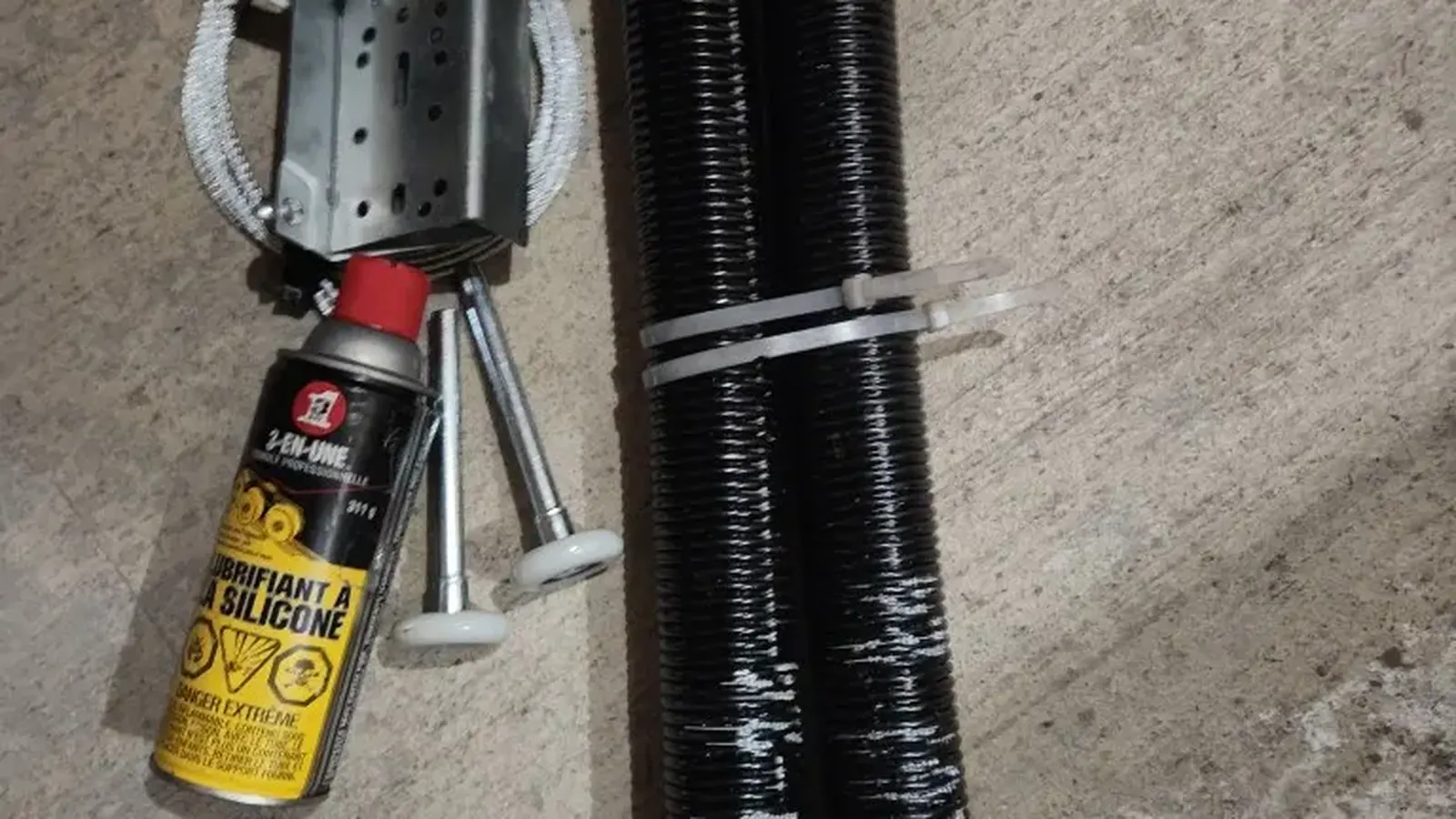
A garage door opens and closes more often than almost anything else in a house, and it does it in heat, humidity, freezing rain and deep cold. A little attention in spring and again in the fall, before the snow comes, keeps it quiet, catches worn parts before they fail, and helps the springs and opener last longer.
This checklist is written for homeowners in Manotick and the villages around it. None of it needs special tools, and none of it involves touching the springs or cables under tension. Those jobs belong to a technician.
1. Watch and listen
Start by simply running the door a few times and paying attention. A healthy door moves smoothly and fairly quietly, rises evenly on both sides and stops cleanly at the top and bottom.
- Grinding, scraping or popping sounds point to worn rollers, dry hinges or a track that is out of line.
- Jerky movement can mean binding rollers or a door that is out of balance.
- If one side rises first, a cable or spring may be uneven. Stop and have it checked.
2. Test the balance
With the door closed, pull the red emergency release cord to disconnect the opener. Lift the door by hand to about waist height and let go carefully. A well-balanced door stays roughly where you leave it. If it drops, or flies up, the springs are worn or out of adjustment. Reconnect the opener by running it once; it will pick the trolley back up.
An unbalanced door makes the opener work far harder than it should and is one of the most common reasons openers fail early. Spring adjustment is not a DIY job. See spring repair if the door fails this test.
3. Look at the hardware
- Rollers: look for cracked nylon wheels, flat spots or rollers that wobble. Worn rollers are inexpensive to replace and make a big difference to noise.
- Hinges: check for cracks and loose bolts, especially on the hinges in the middle of the door.
- Cables: look, but do not touch. Frayed strands, rust or a kinked cable near the bottom bracket need attention soon.
- Bottom brackets: these sit right at the floor where salt and slush collect. Heavy rust here is a warning sign.
- Tracks: make sure they are firmly fastened and free of dents. Clean out leaves and grit with a damp cloth.
4. Lubricate the right parts
Use a garage door lubricant or a silicone or lithium spray, not a heavy grease that collects dirt. Apply a light coat to:
- The hinge pivots.
- The roller bearings, if your rollers have them.
- The torsion spring coils, with a light mist, which helps quiet them and slows rust.
- The bearing plates at each end of the spring shaft.
Do not grease the inside of the tracks. The rollers should roll, not slide, and grease in the track just collects grit.
5. Check the weather seal
The rubber seal along the bottom of the door, and the side and top seals around the frame, keep out drafts, snow, water and mice. In winter, a cracked or flattened bottom seal lets meltwater run under the door, where it freezes overnight and glues the door to the floor. That is hard on the springs and the opener.
From inside the closed garage, look for daylight along the bottom and sides. If you see it, or if the seal is stiff and cracked, it is time for a new one. Most modern doors use a replaceable seal that slides into an aluminum retainer.
6. Test the safety features
- Photo-eye sensors: start closing the door and wave something through the beam near the floor. The door should stop and reverse right away. Wipe the lenses clean and make sure both sensors face each other.
- Auto-reverse: lay a piece of wood or a roll of paper towel flat on the floor under the door and close it. The door should reverse as soon as it touches the object. If it does not, stop using the opener until it is adjusted.
- Manual release: make sure everyone in the house knows where the red cord is and how to use it safely during a power outage.
7. Look after the opener
Check that the rail is firmly mounted, the chain or belt is not sagging badly, and the remotes work from a sensible distance. Replace remote and keypad batteries before winter. If the opener has a battery backup, check its status light. After a power outage, test the door once to be sure the settings held. If anything seems off, our opener repair page explains the common faults.
When to call a professional
Call rather than tinker if you notice a broken or rusted spring, a frayed cable, a door that is crooked or off its track, a bent section, or a door that fails the balance or auto-reverse test. A yearly tune-up visit before winter is a good habit for older doors and for country garages that see heavy use. If it is already too late and the door will not open or close, go straight to emergency repair.

